Leave Your Message

Why Choose Metal Fence Panels for Global Projects?

Why Choose Metal Fence Panels for Global Projects?

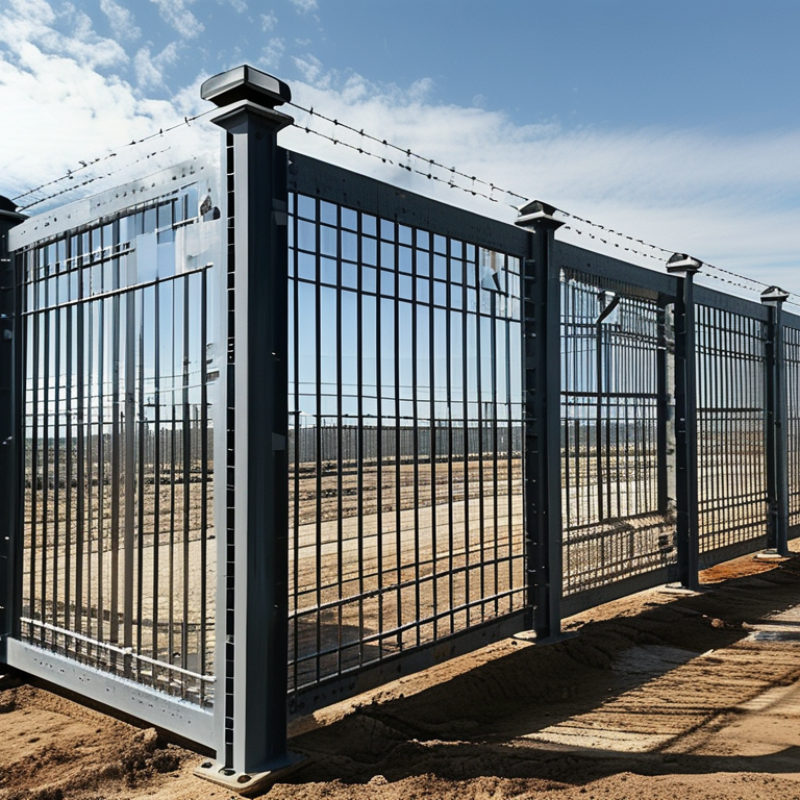
Global infrastructure projects demand more than a strong boundary. They require predictable performance across different climates, transport routes, labor conditions, and maintenance budgets. Metal Fence Panels offer a practical balance of durability, modular installation, and long service life. Galvanized steel can resist moisture, while powder-coated finishes provide added protection against sunlight, abrasion, and surface corrosion. Still, no coating is magic. Coastal salt, poor drainage, and careless handling can shorten a fence’s life.

Tim Carter, a building educator and founder of Ask the Builder, states, “A fence must fit the site, not just the catalog.” That principle matters when selecting Metal Fence Panels for international work. A panel designed for a dry inland site may perform differently beside a humid port or in a freezing industrial zone. Project teams should examine steel thickness, weld quality, post spacing, coating specifications, wind exposure, and replacement access. Clear installation drawings also reduce mistakes when local crews work from unfamiliar systems.

The practical advantage is visible. Panels arrive in organized sections, move efficiently by container, and connect with familiar hardware. Damaged sections can often be replaced without rebuilding the entire perimeter. Yet project planners should not choose panels by price alone. Freight costs, customs documentation, site preparation, and long-term maintenance can change the final value. Metal Fence Panels are not automatically the best answer for every location. Their success depends on honest site assessment, competent installation, and specifications that survive real weather—not just a polished brochure.
Why Choose Metal Fence Panels for Global Projects?

What Metal Fence Panels Are and Where Global Projects Use Them

Why Choose Metal Fence Panels for Global Projects?

Metal fence panels are factory-made sections that connect with posts, brackets, and gates. They are commonly produced from steel or aluminum. Steel offers strong impact resistance, while aluminum reduces weight and may suit projects with strict handling limits. Panels can use vertical bars, welded mesh, or solid sheets. Their finish may include galvanizing, powder coating, or another corrosion-control system.

Global projects use these panels around solar farms, logistics centers, schools, transport facilities, warehouses, and public utility sites. A coastal project may need stronger corrosion protection because salt air attacks exposed metal quickly. A cold-region installation needs posts and foundations that tolerate frost movement.

Security teams often prefer welded mesh for visibility, while privacy zones may require tighter or solid panels. In my project reviews, unclear ground conditions cause more trouble than panel selection. That is worth remembering.

Drainage, wind exposure, soil strength, access routes, and local safety standards should guide the specification. A perfect panel does not exist.

Tips: Check coating requirements before ordering. Confirm panel dimensions, post spacing, gate access, and replacement availability. Request sample sections when color, texture, or visibility matters. Also, leave room for installation errors. Small mismatches can become expensive across a large site.
How Metal Fence Panels Perform Across Different Climates

Why Choose Metal Fence Panels for Global Projects?

Metal fence panels perform differently across climates, and specification cannot rely on appearance alone. ISO 9223:2012 classifies atmospheric corrosivity from C1 to CX, covering dry rural areas, coastal zones, and severe industrial environments. A panel near saltwater may develop corrosion faster than one inland, even with the same coating. The AMPP IMPACT study estimated global corrosion costs at 3.4% of worldwide gross domestic product in 2013. That figure makes maintenance planning more than a technical detail.

In humid and coastal regions, hot-dip galvanized steel offers a protective zinc layer that shields exposed steel. Powder coating can add color stability and another barrier, but damaged edges still deserve attention. In cold regions, freeze-thaw cycles can loosen posts when drainage is poor. Windblown sand may abrade finishes in dry climates. Very hot sunlight can also reduce coating performance over time. Small details matter.

Laboratory tests help, but they are not crystal balls. ASTM B117 salt-spray results should not be treated as an exact prediction of outdoor service life. Project teams should review ISO 9223 exposure conditions, coating thickness, drainage, fasteners, and local maintenance access. I would not promise identical performance everywhere. Installation quality often decides the result. A perfect panel can fail early when water remains trapped around its base.

Which Panel Materials and Designs Suit Project Requirements

For global fencing projects, panel material should follow exposure, loading, maintenance, and local supply conditions. Galvanized steel suits large boundaries because it offers high stiffness, broad availability, and predictable fabrication. The World Steel Association reported about 1.89 billion tonnes of crude steel production in 2023, reflecting a mature international supply chain. However, production scale does not guarantee corrosion resistance. Coastal sites need thicker zinc protection, sealed edges, and coating systems selected against ISO 9223 exposure categories.

Aluminum panels reduce handling weight and can simplify installation on difficult terrain. The International Aluminium Institute reports that recycled aluminum requires roughly 5% of the energy used for primary production. This supports lower-impact procurement when recycled content and traceability are verified. Yet aluminum is less stiff than steel, so larger panels may need stronger frames. Stainless steel performs well near saltwater, but its higher cost needs clear justification. Weathering steel can create a stable surface layer in suitable climates, although persistent moisture may cause uneven staining.

Design must translate project risks into panel geometry. Welded mesh improves visibility and airflow, while solid panels provide privacy and stronger visual screening. Perforated panels can balance concealment with wind relief. On site, wind often exposes weak posts before panels fail. That assumption is easy to miss. Engineers should check local wind loads, foundation conditions, impact risks, and maintenance access. In practice, modular panels simplify replacement, but repeated patterns can look too industrial. A small mismatch in color or coating may become obvious across a long international boundary. Data helps; site experience still corrects the drawing.

Why Choose Metal Fence Panels for Global Projects?

Indicative suitability of common panel materials against typical international project requirements

Scores range from 1 to 5 and reflect typical engineering characteristics: structural strength, corrosion resistance, weight efficiency, privacy potential, and lifecycle economy. Galvanized steel is often suited to general infrastructure, welded mesh supports visibility and security, aluminum is useful where low weight matters, stainless steel performs well in aggressive environments, and louvered or solid panels provide stronger privacy. Actual results depend on coating specification, climate, loading, installation, and local standards.

How to Plan Transport, Installation, and Regulatory Compliance

Metal fence panels suit global projects because they are durable, modular, and easier to handle than many site-built systems. Their repeatable dimensions simplify quantity planning and replacement. Yet transport planning needs more than counting panels. Measure twice. Confirm panel lengths, post spacing, fasteners, and protective finishes before booking freight. A single incorrect measurement can create unused space inside a container.

Pack panels with separators to reduce scratches and edge damage. Keep posts bundled by installation zone, and label every bundle clearly. Shipping documents should match the physical cargo, including weights, dimensions, material descriptions, and country-of-origin details. Import duties and inspection requirements vary by destination. Paperwork matters. A local customs specialist can identify missing certificates before the shipment reaches port.

Installation plans should reflect the actual site, not only the drawings. Check ground levels, drainage, wind exposure, and underground utilities before drilling. Some regions require permits, height limits, visibility rules, or special protections near roads and public facilities. Confirm accessibility and safety requirements with the responsible authority. Installation crews should receive a sequence map and torque guidance. In practice, early schedules are often too optimistic. Weather, delayed concrete curing, and uneven ground can change the plan. Allow realistic time for inspections and corrections, while recording changes with dated site photos. We sometimes overlook small alignment errors until several panels are connected. A second measurement then saves considerable rework.

Why Metal Fence Panels Deliver Long-Term Project Value

For global projects, metal fence panels offer more than immediate site security. Their long-term value begins with predictable performance across changing climates. Engineers can specify galvanized steel or corrosion-resistant finishes according to moisture, salt, and temperature exposure. On a coastal site, careful coating selection matters more than a low purchase price. Rust starts quietly.

From project experience, panel systems also reduce labor variability. Standard dimensions support faster installation, simpler inspections, and easier replacement after accidental damage. A damaged section can often be removed without rebuilding the entire boundary. This protects schedules and limits waste. However, metal is not maintenance-free. Cut edges, fasteners, drainage points, and ground contact require regular checks. Ignoring these details can shorten service life, even when panels appear strong.

Long-term value also depends on documentation and local expertise. Clear drawings, load calculations, coating specifications, and inspection records help teams make consistent decisions across countries. Qualified installers should confirm wind exposure, foundation conditions, and access requirements before installation. In remote projects, spare panels and compatible hardware can prevent costly delays. I have found that the cheapest system is rarely the least expensive over ten years. Still, lifecycle estimates can be imperfect when labor rates or climate data change. That uncertainty deserves honest review, not optimistic promises.

Why Choose Metal Fence Panels for Global Projects? - Why Metal Fence Panels Deliver Long-Term Project Value

Project Value Dimension Typical Metal Fence Panel Benchmark Long-Term Project Benefit Key Planning Consideration
Expected service life Approximately 30–70 years for properly designed and protected steel systems, depending on coating, environment, and maintenance. Fewer replacement cycles can reduce disruption, waste, and long-term ownership costs. Specify the steel grade, coating system, exposure category, and drainage details.
Corrosion protection Hot-dip galvanizing provides a zinc coating; duplex systems combine galvanizing with an additional paint or powder-coat layer. Improves resistance to rain, humidity, industrial atmospheres, and many coastal conditions when correctly specified. Use the applicable corrosion category and coating requirements for the installation location.
Maintenance demand Routine visual inspection is generally recommended at least annually; cleaning frequency depends on dust, salt, pollution, and rainfall. Predictable maintenance supports asset planning and helps prevent minor coating damage from becoming structural corrosion. Schedule additional inspections for coastal, chemical, high-traffic, and frequently washed areas.
Panelized installation Factory-made panels are commonly supplied in modular widths of about 2.0–2.5 m and heights of about 1.2–2.4 m. Standardized modules can simplify quantity calculations, logistics, replacement, and site sequencing. Confirm local transport limits, access conditions, post spacing, and foundation tolerances.
Security and boundary control Rigid welded or formed metal panels can provide continuous physical separation with optional anti-climb profiles and controlled access points. Supports perimeter protection, access management, and clear site boundaries for residential, commercial, infrastructure, and industrial projects. Select mesh aperture, wire diameter, panel height, gates, and fixings according to the required security level.
Wind and structural performance Performance is determined by panel geometry, post spacing, foundation design, fasteners, and the site’s calculated wind pressure. A properly engineered system can deliver consistent performance across exposed sites and varied project scales. Design to the governing local wind, seismic, snow, impact, and foundation requirements; do not rely on a universal load rating.
Global logistics Flat or nested panels can be palletized and shipped as standardized components, while steel supply chains are widely established internationally. Standard formats can simplify procurement, customs documentation, replacement ordering, and multi-site deployment. Verify container loading plans, packaging protection, local standards, and available installation skills.
Lifecycle cost control Total cost includes panels, posts, foundations, installation, transport, inspection, coating maintenance, repairs, and eventual replacement. Evaluating whole-life cost helps prevent a low initial purchase price from creating higher maintenance or replacement expenses later. Compare alternatives over the planned project life using the same service, environmental, and installation assumptions.
Sustainability and end-of-life value Steel and aluminum are recyclable through established metal-recovery systems; recyclable content depends on the product and supply chain. Durability and recoverable material value can support waste reduction and circular procurement objectives. Request material declarations where required and separate coated metal from non-metal components during demolition.
Standards and quality control Common reference frameworks include ISO 1461 for hot-dip galvanized coatings, ISO 12944 for corrosion protection, and local structural and wind-load codes. Clear specifications improve consistency between suppliers, countries, installers, and inspection teams. Define tolerances, coating thickness, test documents, installation procedures, and acceptance criteria before procurement.

Note: The figures and ranges are typical planning benchmarks, not guaranteed product ratings. Actual performance depends on material grade, coating system, exposure conditions, structural design, installation quality, and local regulations.