Leave Your Message

How to Choose Aluminum Railings for Global Projects?

Choosing Aluminum Railings for global projects requires more than comparing profiles, finishes, and prices. Climate, code requirements, logistics, maintenance, and user safety must work together. The International Aluminium Institute reported approximately 70 million tonnes of primary aluminium production worldwide in 2023. This scale supports broad supply availability, but it does not guarantee consistent alloy quality or fabrication expertise in every market.

The project location matters immediately. A coastal hotel may face salt spray, while a mountain walkway may experience freeze-thaw cycles and heavy snow. Specify the alloy, temper, wall thickness, drainage details, and fastener compatibility before requesting quotations. Common architectural alloys, such as 6063, can provide attractive extrusions, but performance depends on design and processing. Do not assume the same finish suits Singapore, Dubai, and northern Europe.

Standards vary.

Use local structural and accessibility codes as the controlling reference. ISO 9223 can help classify atmospheric corrosivity, while QUALICOAT or AAMA coating requirements may guide finish performance. The UNEP Global Status Report for Buildings and Construction 2023 identified buildings and construction as responsible for about 37% of global energy-related and process-related carbon emissions. Therefore, recycled content, service life, repairability, and transport distance deserve attention—not only initial cost.

A practical specification should request test records, coating warranties, load calculations, material certificates, and installation drawings. It should also define inspection points, tolerances, and replacement procedures. In my experience, beautiful samples sometimes hide weak documentation. That risk deserves a second review. No single railing system is perfect; the strongest choice balances verified performance, local compliance, reliable supply, and realistic maintenance.
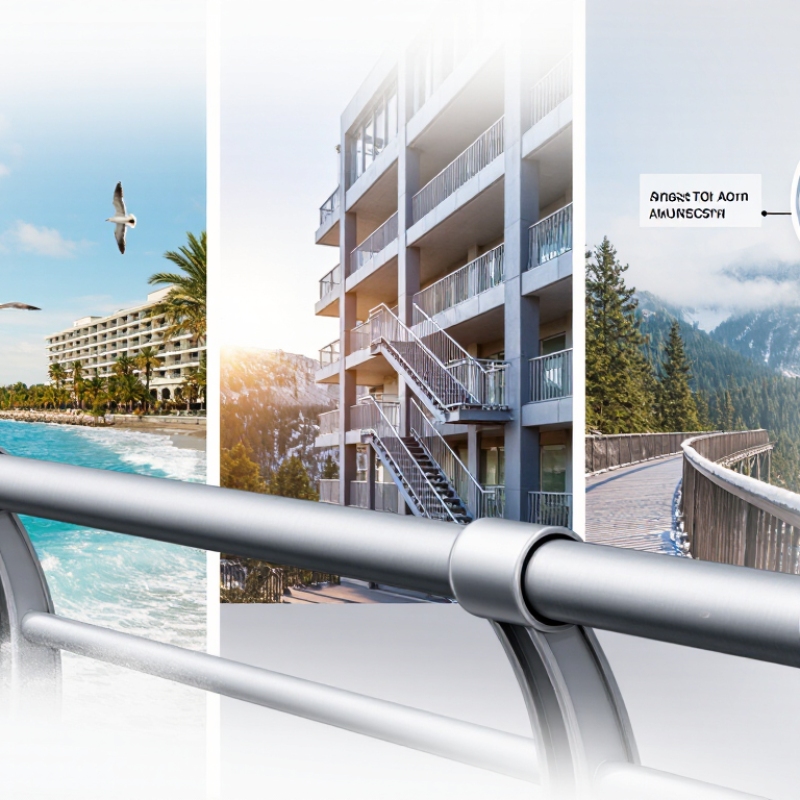
How to Choose Aluminum Railings for Global Projects?

Define Project Requirements for Aluminum Railings

How to Choose Aluminum Railings for Global Projects?

Define Project Requirements for Aluminum Railings

Begin with the project’s actual exposure, use, and structural demands. A balcony beside a tropical shoreline needs different protection than an indoor gallery. Record wind pressure, crowd loading, fall height, temperature range, and drainage conditions. Eurocode EN 1991-1-1 assigns different imposed loads to residential, assembly, and access areas. Do not copy a familiar value without checking the local code. It is an easy mistake.

Specify alloy strength, profile thickness, connection details, and allowable deflection before requesting quotations. Aluminum railings should resist design loads without excessive movement or rattling. Request engineering calculations, material certificates, and coating records. ISO 9223 classifies atmospheric corrosivity from very low to extreme. That classification can guide finish selection, but site inspection remains essential. Salt, standing water, and dissimilar metals often create failures that drawings miss.

Global procurement also requires measurable sustainability requirements. The International Aluminium Institute reports that nearly 75% of all aluminum ever produced remains in use. This supports long service life and future recovery, but only when components can be maintained and separated. Define replaceable fasteners, inspection access, packaging limits, and recycling information. I would not treat a low initial price as a complete specification. A cheaper railing may demand custom repairs later. Leave room for review, because the first requirement schedule is rarely perfect.
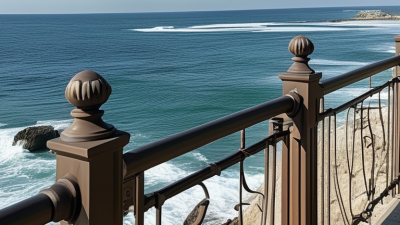
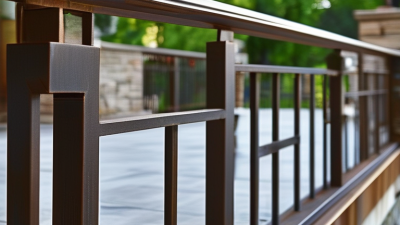
Compare Aluminum Alloys, Finishes, and Structural Performance

Choosing Aluminum Railings for Global Projects

Alloy selection should follow load calculations, exposure, and fabrication needs. The Aluminum Association’s Aluminum Standards and Data 2024 lists 6061-T6 as a higher-strength structural alloy. Typical minimum yield strength reaches about 276 MPa for many 6061-T6 products. Architectural 6063-T6 usually offers better extrusion quality and smoother profiles. Its typical minimum yield strength is lower, near 214 MPa. Values change with section shape, thickness, and temper. Never copy a table without checking the actual mill certificate.

Finish selection depends on climate and maintenance access. Anodizing creates a hard oxide layer and preserves aluminum’s visible texture. It suits façades with moderate pollution and frequent cleaning. Powder coating provides broader color choices and helps isolate the metal from moisture. AAMA 2604 and AAMA 2605 define different performance levels for exterior coatings. ISO 9227 salt-spray testing can compare resistance, but it cannot reproduce every coastal condition. That limitation matters.

Structural performance must include post spacing, glass or infill loads, wind pressure, thermal movement, and anchorage. The International Building Code and Eurocode approaches can produce different design checks. Request verified deflection limits, connection details, and corrosion allowances. Weak anchors can defeat a strong alloy. I have seen attractive railings fail at poorly isolated fasteners. That is an avoidable oversight. Global procurement also needs traceability, coating records, and independent testing. A stronger alloy is not automatically the safer system.

Evaluate Safety Codes and Regional Compliance Standards

Choosing aluminum railings for global projects starts with local safety codes, not an alloy brochure.

In the United States, verify the adopted International Building Code, local amendments, accessibility rules, and workplace requirements. Guard height, opening limits, handrail continuity, load resistance, and anchorage can vary by occupancy. In Europe, check EN 1991 load actions and the applicable National Annex. Then confirm structural design and execution requirements. The United Kingdom uses separate building guidance. Australia and Canada apply national systems with local interpretation. Never treat “international standard” as complete approval. It usually is not.

Risk needs a measurable starting point. The World Health Organization’s Falls fact sheet, published in 2021, estimates 684,000 fatal falls worldwide each year. Older adults face the greatest risk. That figure is not a railing test result, but it demands serious engineering. Request calculations for wind, crowd, impact, thermal movement, and substrate capacity. Specify tested infill spacing, corrosion exposure, fastener material, and inspection intervals. Ask whether testing covers the assembled railing, not only a short sample. A beautiful section can still fail at the anchor.

Create a compliance matrix for every project. Record the code edition, approving authority, design loads, test evidence, and installer qualifications. Keep revision records. Small omissions become expensive on site. I would also require local engineering review of the final connection detail, because drawings can hide practical errors.

Select Railing Systems for Climate, Installation, and Maintenance Needs

Selecting aluminum railings for a global project starts with the site, not a catalogue. Coastal air, winter salt, intense sunlight, and heavy rain change the specification. Use marine-suitable finishes and corrosion-resistant fasteners near shorelines. In cold regions, allow for thermal movement and freeze-thaw cycles. Dark finishes may become hot in direct sunlight. Small details matter.

Installation conditions deserve equal attention. A railing designed for a factory floor may fail on a remote site with uneven slabs and limited tools. Confirm anchor types, substrate strength, drainage paths, and measurement tolerances before shipping. Verify structural loads and accessibility requirements with qualified local professionals. Modular sections can reduce cutting and alignment errors. Clear drawings and sample assemblies help local crews work consistently. Still, over-standardizing can create problems. A connection suited to concrete may not suit masonry or steel.

Maintenance should be planned during system selection. Specify accessible fasteners, replaceable components, and cleaning methods suited to local water quality. In dusty regions, smooth profiles reduce buildup around joints. In humid climates, inspect hidden interfaces after the first wet season. Keep spare parts near the project, not in a distant warehouse. We have seen attractive systems lose value when inspection access was ignored. That lesson is uncomfortable, but useful. A six-month inspection often reveals more than a polished handover report.

Assess Suppliers, Costs, Customization, and Global Logistics

Choosing aluminum railings for a global project starts with supplier evidence, not attractive quotations. Request material certificates, production photos, inspection records, and recent project references. A reliable supplier should explain alloy grades, coating methods, load testing, and quality controls clearly. Ask for physical samples. Small differences in finish can become obvious across a long installation.

Compare total landed cost, not only the factory price. Include engineering, tooling, packaging, insurance, freight, duties, inland delivery, and installation support. A cheaper quotation may exclude testing or replacement parts. I once reviewed a project where weak packaging caused scratched handrails. The replacement cost exceeded the original saving. That mistake still deserves reflection. Confirm payment terms, delivery schedules, warranty coverage, and responsibilities under the chosen shipping agreement.

Customization should begin with accurate drawings and site measurements. Discuss post spacing, glass or infill options, fixing methods, colors, surface textures, and allowable tolerances. Modular designs usually simplify repairs and future expansion. However, excessive customization can increase tooling costs and production risks. Keep critical dimensions standardized where possible. For logistics, use moisture-resistant packing, clear component labels, and installation diagrams. Check container loading plans before production starts. Allow time for customs review and local inspections. Schedules often fail at handover, not manufacturing. A practical supplier will provide spare fasteners, replacement sections, and remote technical guidance for installers.