What Are the Top 10 Aluminum Banister Suppliers Worldwide?
Choosing the right Aluminum Banister supplier affects safety, appearance, installation time, and long-term maintenance. A polished catalog alone cannot prove dependable performance. Buyers need evidence from product specifications, project records, testing documents, and customer support practices.
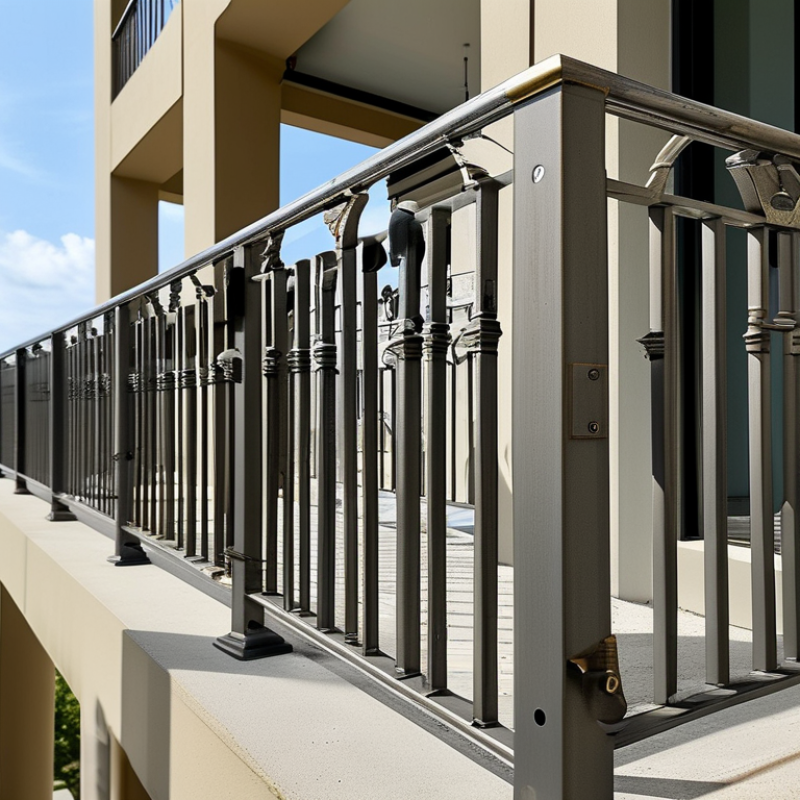
This guide examines ten leading Aluminum Banister suppliers worldwide through practical criteria. These include alloy quality, coating durability, load performance, design flexibility, manufacturing capacity, delivery reliability, and warranty clarity. It also considers whether suppliers support residential balconies, commercial stairways, public facilities, and outdoor environments. Small details matter. A secure handrail should feel rigid, not hollow or loose. Powder coating should remain even around joints, corners, and drilled openings. Installation drawings should show dimensions clearly, including post spacing and mounting plates.
The selection is not based on brand visibility alone. Supplier experience, certifications, quality-control procedures, and verified project examples receive greater attention. Regional service also matters, because replacement parts and technical advice can prevent costly delays. Still, no global ranking is flawless. Product availability, shipping conditions, and building requirements vary by market. A supplier that performs well on a coastal project may not offer the best solution for a high-traffic interior staircase.
Readers should treat this overview as a practical starting point, not a substitute for engineering review. Confirm local requirements, material grades, finish options, and installation responsibility before placing an order. The strongest choice balances reliable manufacturing with clear communication and realistic after-sales support.
Global Aluminum Banister Market Size, CAGR, and Regional Demand Data
The global aluminum banister market is expanding with construction, renovation, and aging-infrastructure projects. Market estimates vary because some reports measure finished systems, while others count aluminum profiles only. Grand View Research valued the global aluminum extrusion market at approximately USD 97 billion in 2023, with growth near 5% annually through 2030. Fortune Business Insights places the broader handrail market on a similar upward path, reporting a CAGR of roughly 6% in recent forecasts.
Regional demand is uneven. Asia-Pacific remains the strongest volume center, supported by urban housing, commercial towers, and large public-transport projects. China and Southeast Asia also benefit from established extrusion capacity. North America shows steady replacement demand, especially for residential remodeling, balconies, and code-compliant access routes. Europe is more specification-driven. Buyers often prioritize recyclable materials, low-maintenance finishes, and documented safety performance.
The leading ten global suppliers should be compared by more than production volume. Extrusion depth, alloy consistency, powder-coating control, engineering support, and delivery reliability matter on real projects. Independent testing and ISO-certified quality systems add confidence. Yet rankings are not perfectly stable. A supplier may lead in profiles but perform poorly in custom fabrication. This is an important limitation. Regional freight costs, installation partners, and certification requirements can change the practical ranking quickly. Reports from Mordor Intelligence and Grand View Research also suggest that construction activity, rather than aluminum pricing alone, will shape near-term banister demand.
6063-T5 Alloy, ASTM Standards, and IBC 200-Pound Load Requirements
The top 10 aluminum banister suppliers should prove more than production capacity.
They should document alloy chemistry, temper, testing, and installation performance. The USGS Mineral Commodity Summaries 2024 estimated global primary aluminum output at about 70 million metric tons in 2023. Scale is impressive, but consistency matters more for architectural railings.
For 6063-T5 components, buyers should request mill certificates and extrusion records. ASTM B221 defines requirements for aluminum-alloy extruded bars, profiles, and tubes. Its data tables identify 6063-T5 as a moderate-strength architectural temper, not a substitute for structural engineering. Ask suppliers to verify wall thickness, dimensional tolerance, and surface treatment for every production batch. Small variations can affect bracket fit.
IBC 2024 Section 1015.3 requires guards to resist a 200-pound concentrated load at the top rail, applied in critical directions.
The code requirement is direct. The product claim is not. Suppliers should provide engineering calculations, test reports, and anchorage details for the specific span. ASTM E985 testing can add useful evidence, although project authorities may require additional verification. Powder coating data should also reference recognized performance testing, such as AAMA 2604 or AAMA 2605, when exposure demands it. A polished catalog is not enough. In practice, installers often discover that substrate condition controls the final result more than the rail itself. That deserves more attention.
Supplier Ranking by Production Capacity, Certifications, and Global Reach
What Are the Top 10 Aluminum Banister Suppliers Worldwide?
A credible top-ten ranking should measure more than factory size. Production capacity shows whether a supplier can support large projects, while certifications reveal process control. The International Aluminium Institute reported approximately 70.6 million tonnes of primary aluminum production worldwide in 2023. This figure indicates a deep raw-material base, but it does not prove railing quality. Capacity must be checked against extrusion lines, finishing equipment, and monthly banister output.
The strongest suppliers typically combine high-volume extrusion with ISO 9001 quality management, ISO 14001 environmental systems, and documented load testing. The ISO Survey 2022 recorded more than 1.2 million ISO 9001 certificates globally. Certification is useful, though paperwork alone can mislead. Buyers should request current certificates, audit scopes, and traceability records for each aluminum batch. Small details matter, such as coating thickness, corner alignment, weld appearance, and packaging around fragile handrail surfaces.
Global reach separates the leading ten from regional manufacturers. Useful indicators include export destinations, warehouse locations, multilingual technical support, and delivery performance. The World Bank’s 2023 Logistics Performance Index shows wide differences in customs efficiency and international transport reliability. A supplier with slightly lower capacity may still perform better in remote markets. That is where rankings become imperfect. Production figures can be self-reported, and certification status may change. An evidence-based assessment should therefore combine factory audits, independent test reports, export records, and recent project references before naming the final ten.
Top 10 Aluminum Banister Suppliers Worldwide
Anonymized supplier ranking based on production capacity, certification coverage, and global market reach
The composite score is calculated from three practical sourcing dimensions: estimated annual aluminum processing capacity, internationally recognized management and product certifications, and the number of countries served. Supplier identities and brand-specific figures are intentionally omitted.
Top 10 Aluminum Banister Suppliers by Products, Regions, and Market Share
What Are the Top 10 Aluminum Banister Suppliers Worldwide?
Top 10 Aluminum Banister Suppliers by Products, Regions, and Market Share
The top ten aluminum banister suppliers differ in product depth, regional reach, and sales strength. A reliable comparison should examine extrusion quality, coating durability, connector design, and installation support. It should also separate manufacturers from trading companies. Numbers can mislead. Market share estimates often combine shipments, revenue, and project visibility.
The strongest suppliers usually offer complete systems, not loose rails alone. Their catalogs may include round profiles, square posts, glass channels, handrails, brackets, gates, and modular stair components.
Suppliers serving North America often focus on residential safety systems and fast delivery. European producers commonly emphasize refined finishes, recyclable materials, and engineered details.
Asian manufacturers may provide wider customization and competitive production capacity. Regional specialists in the Middle East and Oceania often adapt products for heat, salt air, and large outdoor projects.
A practical ranking should compare the ten suppliers by verified production capacity, export coverage, and repeat installer feedback. It should also review sample consistency, packaging, technical drawings, and response times after delivery.
The ranking is not perfect. Private companies may report limited sales data, while large distributors can appear stronger than their factories. A supplier with lower volume may still outperform a major exporter on custom stair geometry, anodized finish control, or replacement-part availability. Independent testing and recent customer evidence remain essential before any purchasing decision.