Leave Your Message

How to Choose the Right Aluminum Moulding Profiles?

Choosing the right Aluminum Moulding Profiles begins with evidence, not appearance. A polished finish can hide weak tolerances, poor alloy selection, or difficult installation. The International Aluminium Institute’s Aluminium Sector Greenhouse Gas Pathways to 1.5°C report projects strong aluminium demand growth through 2050. Its findings also emphasize recycling and lower-carbon production. These trends make profile efficiency important beyond the factory floor.

Svein Richard Brandtzæg, former President and CEO of Hydro, described aluminium as “the metal of the future.” His view remains practical. Aluminium combines low weight, corrosion resistance, thermal performance, and design flexibility. Yet, the best profile depends on its working conditions. A window frame may need thermal breaks. A conveyor component may require greater wall thickness. A decorative trim may prioritize surface quality over structural strength.

Details matter.

During profile selection, engineers should compare alloy grades, temper conditions, dimensional tolerances, corner radii, and finishing methods. The Aluminium Association notes aluminium’s strong recyclability, while the U.S. Geological Survey’s Mineral Commodity Summaries tracks global production and supply risks. These reports support a wider lesson: material availability and lifecycle impact deserve attention alongside price.

A common mistake is choosing the lightest profile automatically. That decision can increase deflection, vibration, or machining waste. It may also create installation problems when fasteners lack enough engagement. In practice, a reliable choice balances load, length, environment, appearance, fabrication, and maintenance. No profile is perfect. The right one is the profile that performs predictably after cutting, drilling, joining, coating, and years of use.
How to Choose the Right Aluminum Moulding Profiles?

Understanding Aluminum Moulding Profiles and Their Applications

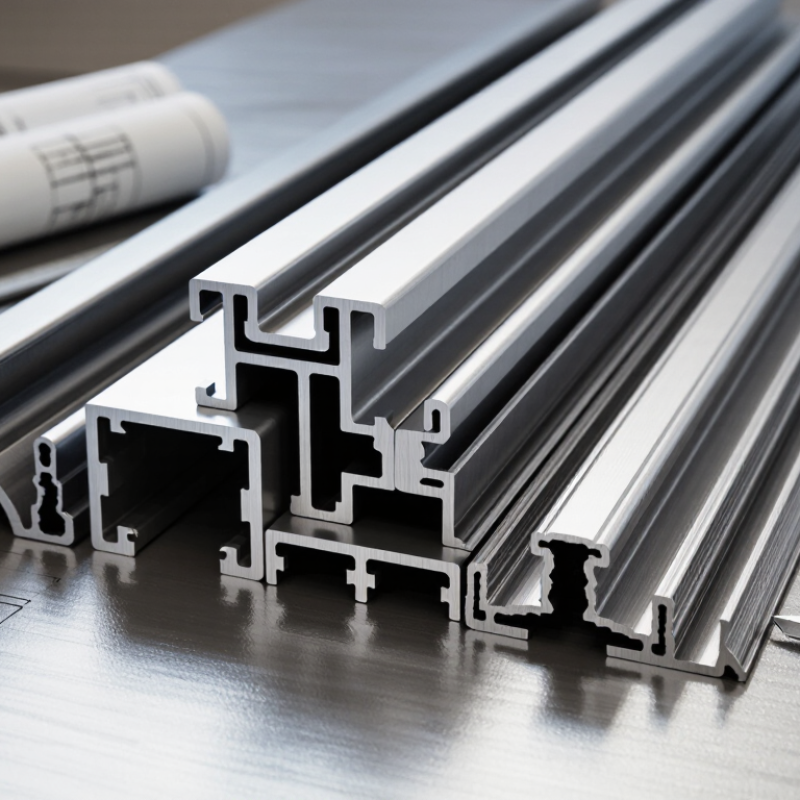
Aluminum moulding profiles are extruded sections used to finish edges, cover joints, and create frames. Their shape determines how they fit with panels, glass, or adjoining trims. A narrow L-profile can protect a sharp panel edge; a U-channel can hold a thin insert. For windows and doors, check the glazing dimensions, drainage path, and space for seals before choosing a section. Architectural profiles commonly use 6063 alloy because it extrudes well and accepts anodized finishes. Fit matters. A polished sample can look right on a desk but reveal gaps against a real wall.

Applications also affect performance. In wet areas, inspect corners and coating specifications; scratches and standing water can shorten a finish’s useful life. For exterior frames, thermal breaks may reduce heat transfer, but the whole assembly—not one profile alone—sets performance. UNEP and GlobalABC’s 2024 Global Status Report for Buildings and Construction estimates that buildings and construction account for 32% of global energy use and 34% of energy-related CO₂ emissions. That makes thermal detailing relevant, especially in building envelopes. Still, a profile with a thermal break is not automatically the best choice: installation, glazing, and climate matter. I would compare a cut sample with the intended panel thickness and joint detail.

Small tolerances are easy to overlook.

Identifying Performance Requirements for Your Project

Choosing an aluminum moulding profile starts with its job, not its appearance. Will it cover an edge, guide a panel, or carry a load? These uses demand different wall thicknesses, shapes, and support spacing. Small details matter. A trim around a cabinet may only need a neat finish, while a long exposed channel could bend if its span is too wide.

Write down the conditions the profile will face. Note the expected load, indoor or outdoor exposure, cleaning chemicals, and temperature changes. For example, a profile beside a sunny window may expand more than one used indoors. Check the supplier’s dimensional tolerances and compare them with your panel thickness and fixing method. A difference of even a few millimeters can leave a visible gap or make installation awkward.

Think about installation, too. Will the profile be screwed, bonded, or slotted into place? Each method affects the required shape and access for tools. It is easy to specify a thicker section “just in case,” but that can add cost and weight without solving the real problem. I would treat that as a useful pause point: confirm the span and load before choosing. For structural applications, have a qualified engineer verify the design rather than relying on appearance alone.

Comparing Profile Shapes, Alloys, and Surface Finishes

Choosing an aluminum moulding profile starts with its job, not its appearance.

A T-slot profile allows adjustable joints, while an L-angle neatly protects exposed edges. Hollow sections can reduce weight, but thin walls may dent during installation. Check the load, fixing method, and available space before settling on a shape.

Alloy and temper change how a profile behaves. 6063 is commonly used for architectural extrusions and smooth visible surfaces; 6061 is often selected where higher strength or machining matters.

Neither label alone guarantees performance: temper and wall thickness count too. The International Aluminium Institute reports that recycling aluminum uses about 5% of the energy needed for primary production.

Recycled content is useful context, but it does not replace checking the specified alloy and temper.

Finish selection should follow the exposure.

Anodizing preserves a metallic look, while powder coating offers a broader color range; coastal air and frequent cleaning can change the choice.

AAMA 2604 and 2605 are industry performance specifications for architectural coatings, useful when comparing durability requirements. That matters outdoors.

One easy mistake: judging from a small finish chip. Request a sample, inspect corners and cut ends, and confirm the cleaning routine.

I would double-check the finish against the actual site; a showroom sample can be a little too reassuring.

Checking Dimensions, Tolerances, and Manufacturing Quality

Choosing an aluminum moulding profile starts with the space it must fit. Record the overall width, height, wall thickness, and any slot or lip dimensions. Check the drawing against the actual installation area, including corners and adjoining parts. A digital caliper can help verify sample pieces, but measure more than one point. Extruded profiles may vary slightly along their length.

Check the supplier’s stated tolerances, not just nominal dimensions. A tight tolerance can matter where profiles join or slide together, while a hidden trim may allow more variation. It is easy to over-specify tolerances; this can add cost without improving the fit. Check the edges, too. Burrs or uneven cuts can complicate assembly.

Manufacturing quality shows in consistent shape, clean surfaces, and straight lengths. Look for dents, twists, scratches, and inconsistent coating or finish. Ask how dimensions are inspected and whether inspection records are available for the order. A sample can reveal issues that a drawing misses, such as a sharp edge or a slot that feels too narrow. Not always obvious. Consider how the profile will be handled and installed, since a finish that looks uniform under workshop lighting may show marks in bright daylight.

How to Choose the Right Aluminum Moulding Profiles?

Checking Dimensions, Tolerances, and Manufacturing Quality

Example screening tolerances are shown as deviations in millimetres. Compare them with the profile drawing and the applicable extrusion standard; allowable tolerances vary with profile geometry, alloy, temper, and manufacturing process. Confirm critical dimensions, straightness, and cut length with the supplier before ordering.

Evaluating Suppliers, Costs, and Long-Term Value

How to Choose the Right Aluminum Moulding Profiles?
Evaluating Suppliers, Costs, and Long-Term Value

A low quotation can hide costs that appear after installation. Compare alloy and temper certificates, dimensional tolerances, finish consistency, and packaging—not just price per metre. Ask suppliers how they control wall thickness and straightness across repeat orders. A sample may look perfect; a long run can reveal variation. Small details matter.

Request a clear breakdown of tooling, minimum order quantities, finishing, freight, and rejected-part replacement. Then compare lead times and inspection records. A profile with a slightly higher unit price may reduce trimming, assembly delays, and maintenance. I still find this easy to overlook: a cheap finish can scratch during handling, especially around exposed corners.

Long-term value also depends on material sourcing and end-of-life recovery. The International Aluminium Institute’s aluminium recycling guidance reports that recycling aluminium uses about 5% of the energy needed for primary production. Ask suppliers for recycled-content documentation and confirm the alloy suits your application; recycled content alone does not prove consistent performance. For a fair comparison, estimate cost over the product’s service life, including replacement and scrap recovery. Some project forecasts remain imperfect, so leave room for changing energy and transport costs.

How to Choose the Right Aluminum Moulding Profiles? - Evaluating Suppliers, Costs, and Long-Term Value

Comparison guide: The cost figures below are illustrative planning ranges in USD per kilogram for common North American sourcing scenarios, not verified supplier quotations. Actual prices depend on alloy, profile complexity, order size, metal-market conditions, finishing, and freight.
Supplier / Profile Option Best Fit Typical Material or Finish Indicative Extrusion Cost Lead-Time Considerations Long-Term Value Check
Stock-profile distributor Small projects, repairs, prototypes, and standard trim shapes Common architectural alloys and mill, anodized, or painted finishes; check the specific product specification Approximately $5–$12/kg; short lengths and cut-to-size service may cost more per kilogram Often the quickest option when the required shape and finish are in stock Compare usable yield, cut charges, minimum order value, and availability of matching replacement stock
Extruder with an existing die Repeat orders using an established profile without developing new tooling Commonly 6063 for general-purpose architectural profiles; temper and finish should be specified for the application Approximately $4–$10/kg for the extrusion; finishing and fabrication are usually additional Typically shorter than a new-tooling order, but production queues and minimum quantities still apply Confirm die ownership or access, dimensional tolerances, inspection records, and future reorder availability
Custom-profile extruder A design requiring a specific cross-section, fit, or functional feature Alloy and temper selected according to strength, formability, corrosion exposure, and finishing needs Approximately $6–$16/kg for production extrusion; one-time die and sample charges are quoted separately Allow time for design review, die manufacture, sample approval, and production scheduling Evaluate die life, maintenance terms, dimensional control, and how tooling costs amortize over forecast volume
High-volume production source Stable designs with predictable, recurring demand Specified alloy, temper, tolerances, and finish controlled through an agreed product specification Approximately $3.50–$8/kg for suitable volume programs; setup, finishing, and logistics may be separate Unit cost may improve with planned production runs; confirm capacity and delivery schedule in writing Compare total landed cost, quality consistency, inventory terms, supply continuity, and the cost of defects or delays
Extrusion with machining or fabrication Parts needing drilled holes, cut-to-length sections, slots, or assembly-ready features Extruded base profile plus specified machining, fabrication, and optional surface treatment Approximately $8–$25+/kg equivalent; machining and handling can make per-part pricing more useful than per-kilogram pricing Additional operations can extend lead time; request a process-by-process schedule Check whether bundled operations reduce handling, assembly labor, scrap, and quality-inspection costs

Supplier Evaluation Checklist

Evaluation Dimension What to Request or Verify Why It Matters
Technical specification Alloy, temper, dimensions, tolerances, straightness, and applicable product standard These requirements affect performance, fit, processing, and acceptance inspection
Finish and environment Finish type, color or gloss requirements, coating thickness where applicable, and intended exposure Appearance, wear, and corrosion performance depend on the finish and service conditions
Quality documentation Material certificates, inspection reports, traceability, sample approval, and defect-handling process Documentation helps verify conformity and resolve quality issues across repeat orders
Total cost of ownership Tooling, minimum order, scrap, packaging, freight, finishing, machining, storage, and replacement costs The lowest quoted material price may not produce the lowest delivered and usable-part cost
Supply reliability Capacity, normal and peak lead times, reorder process, contingency planning, and communication practices Reliable availability reduces the risk of production interruptions and costly expedited orders

Cost note: Ranges are broad budgeting examples, not market guarantees. Compare written quotations using the same alloy, temper, profile drawing, order quantity, finish, tolerances, delivery terms, and included services.